当前位置:网站首页>Gradient understanding decline
Gradient understanding decline
2020-11-06 01:14:27 【Artificial intelligence meets pioneer】
author |PHANI8 compile |VK source |Analytics Vidhya
Introduce
In this article , We'll see what a real gradient descent is , Why it became popular , Why? AI and ML Most of the algorithms in follow this technique .
Before we start , What the gradient actually means ? That sounds strange, right !
Cauchy is 1847 The first person to propose gradient descent in
Um. , The word gradient means the increase and decrease of a property ! And falling means moving down . therefore , in general , The act of descending to a certain point and observing and continuing to descend is called gradient descent
therefore , Under normal circumstances , As shown in the figure , The slope of the top of the mountain is very high , Through constant movement , When you get to the foot of the mountain, the slope is the smallest , Or close to or equal to zero . The same applies mathematically .
Let's see how to do it
Gradient descent math
therefore , If you see the shape here is the same as the mountains here . Let's assume that this is a form of y=f(x) The curve of .
Here we know , The slope at any point is y Yes x The derivative of , If you use a curve to check , You'll find that , When you move down , The slope decreases at the tip or minimum and equals zero , When we move up again , The slope will increase
Remember that , We're going to look at the smallest point x and y What happens to the value of ,
Look at the picture below , We have five points in different positions !
.png)
When we move down , We will find that y The value will decrease , So in all the points here , We get a relatively minimum value at the bottom of the graph . therefore , Our conclusion is that we always find the minimum at the bottom of the graph (x,y). Now let's take a look at how ML and DL Pass this , And how to reach the minimum point without traversing the whole graph ?
In any algorithm , Our main purpose is to minimize the loss , This shows that our model works well . To analyze this , We're going to use linear regression
Because linear regression uses straight lines to predict continuous output -
Let's set a straight line y=w*x+c
Here we need to find w and c, In this way, we have the best fitting line to minimize the error . So our goal is to find the best w and c value
Let's start with some random values w and c, We update these values based on the loss , in other words , We update these weights , Until the slope is equal to or close to zero .
We will take y The loss function on the axis ,x There's... On the shaft w and c. Look at the picture below -
.png)
In order to achieve the minimum in the first graph w value , Please follow these steps -
-
use w and c Start calculating a given set of x _values The loss of .
-
Draw points , Now update the weight to -
w_new =w_old – learning_rate * slope at (w_old,loss)
Repeat these steps , Until the minimum value is reached !
-
We subtract the gradient here , Because we want to move to the foot of the mountain , Or moving in the steepest direction of descent
-
When we subtract , We're going to get a smaller slope than the previous one , This is where we want to move to a point where the slope is equal to or close to zero
-
We'll talk about the learning rate later
The same applies to pictures 2, Loss and c Function of
Now the question is why we put learning rate in the equation ? Because we can't traverse all the points between the starting point and the minimum
We need to skip a few points
-
We can take big steps at the beginning .
-
however , When we're close to the minimum , We need to take small steps , Because we're going to cross the minimum , Move to a slope to add . In order to control the step size and movement of the graph , The introduction of learning rate . Even if there is no learning rate , We'll also get the minimum , But what we care about is that our algorithms are faster !!
.png)
Here is an example algorithm for linear regression using gradient descent . Here we use the mean square error as the loss function -
1. Initialize model parameters with zero
m=0,c=0
2. Use (0,1) Any value in the range initializes the learning rate
lr=0.01
The error equation -
.png)
Now use (w*x+c) Instead of Ypred And calculate the partial derivative
.png)
3.c It can also be calculated that
.png)
4. Apply this to all epoch Data set of
for i in range(epochs):
          y_pred = w * x +c
          D_M = (-2/n) * sum(x * (y_original - y_pred))
          D_C = (-2/n) * sum(y_original - y_pred)
Here the summation function adds the gradients of all points at once !
Update parameters for all iterations
W = W – lr * D_M
C = C – lr * D_C
Gradient descent method is used for deep learning of neural networks …
ad locum , We update the weights of each neuron , In order to get the best classification with minimum error . We use gradient descent to update the ownership value of each layer …
Wi = Wi – learning_rate * derivative (Loss function w.r.t Wi)
Why it's popular ?
Gradient descent is the most commonly used optimization strategy in machine learning and deep learning .
It's used to train data models , It can be combined with various algorithms , Easy to understand and implement
Many statistical techniques and methods use GD To minimize and optimize their process .
Reference
- https://en.wikipedia.org/wiki/Gradient_descent
- https://en.wikipedia.org/wiki/Stochastic_gradient_descent
Link to the original text :https://www.analyticsvidhya.com/blog/2020/10/what-does-gradient-descent-actually-mean/
Welcome to join us AI Blog station : http://panchuang.net/
sklearn Machine learning Chinese official documents : http://sklearn123.com/
Welcome to pay attention to pan Chuang blog resource summary station : http://docs.panchuang.net/
版权声明
本文为[Artificial intelligence meets pioneer]所创,转载请带上原文链接,感谢
边栏推荐
- C++ 数字、string和char*的转换
- C++学习——centos7上部署C++开发环境
- C++学习——一步步学会写Makefile
- C++学习——临时对象的产生与优化
- C++学习——对象的引用的用法
- C++编程经验(6):使用C++风格的类型转换
- Won the CKA + CKS certificate with the highest gold content in kubernetes in 31 days!
- C + + number, string and char * conversion
- C + + Learning -- capacity() and resize() in C + +
- C + + Learning -- about code performance optimization
猜你喜欢
-
C + + programming experience (6): using C + + style type conversion
-

Latest party and government work report ppt - Park ppt
-
在线身份证号码提取生日工具
-
Online ID number extraction birthday tool
-
️野指针?悬空指针?️ 一文带你搞懂!
-
Field pointer? Dangling pointer? This article will help you understand!
-
HCNA Routing&Switching之GVRP
-
GVRP of hcna Routing & Switching
-
Seq2Seq实现闲聊机器人
-
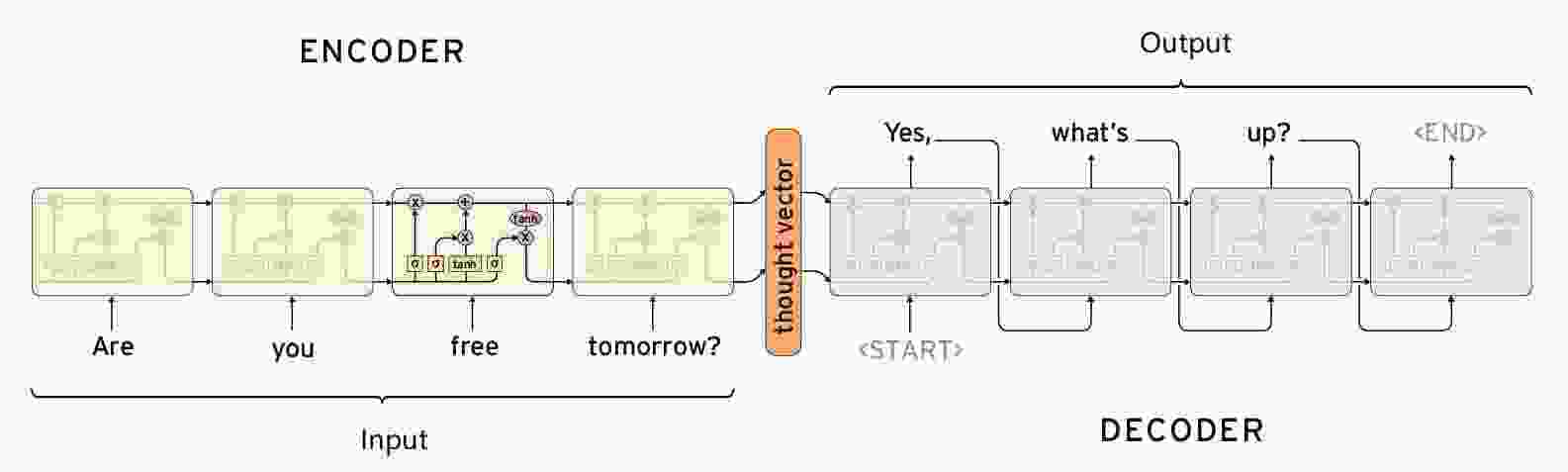
【闲聊机器人】seq2seq模型的原理
随机推荐
- LeetCode 91. 解码方法
- Seq2seq implements chat robot
- [chat robot] principle of seq2seq model
- Leetcode 91. Decoding method
- HCNA Routing&Switching之GVRP
- GVRP of hcna Routing & Switching
- HDU7016 Random Walk 2
- [Code+#1]Yazid 的新生舞会
- CF1548C The Three Little Pigs
- HDU7033 Typing Contest
- HDU7016 Random Walk 2
- [code + 1] Yazid's freshman ball
- CF1548C The Three Little Pigs
- HDU7033 Typing Contest
- Qt Creator 自动补齐变慢的解决
- HALCON 20.11:如何处理标定助手品质问题
- HALCON 20.11:标定助手使用注意事项
- Solution of QT creator's automatic replenishment slowing down
- Halcon 20.11: how to deal with the quality problem of calibration assistant
- Halcon 20.11: precautions for use of calibration assistant
- “十大科学技术问题”揭晓!|青年科学家50²论坛
- "Top ten scientific and technological issues" announced| Young scientists 50 ² forum
- 求反转链表
- Reverse linked list
- js的数据类型
- JS data type
- 记一次文件读写遇到的bug
- Remember the bug encountered in reading and writing a file
- 单例模式
- Singleton mode
- 在这个 N 多编程语言争霸的世界,C++ 究竟还有没有未来?
- In this world of N programming languages, is there a future for C + +?
- es6模板字符
- js Promise
- js 数组方法 回顾
- ES6 template characters
- js Promise
- JS array method review
- 【Golang】️走进 Go 语言️ 第一课 Hello World
- [golang] go into go language lesson 1 Hello World